























Spec-Match or Meltdown: How to Find the Correct Emergency Capacitor Replacement for Your AC
Share
HVAC SUPPLIES
It is the absolute peak of a mid-summer heatwave, the kind of afternoon where the asphalt shimmer and the humidity makes the air feel thick enough to swim in. You are sitting in your living room when you notice the temperature creeping up. You check the vents; the air is moving, but it isn't cold. You step outside to investigate your condenser unit, and instead of the reassuring roar of the fan and compressor, you hear a faint, rhythmic humming—a mechanical plea for help.
This scenario is the "quiet killer" of summer comfort. In the vast majority of cases where an air conditioner suddenly stops cooling, the culprit isn't a dead compressor or a massive refrigerant leak. It is a small, cylindrical component often costing less than a tank of gas: the capacitor. Think of the capacitor as a high-voltage battery that provides the initial "kick" of energy required to jumpstart the heavy motors inside your system. Without it, your AC is effectively stuck in neutral. At HVACSupplies.com , we see this emergency daily, and while the part is simple, finding the exact match during a localized shortage is the difference between a cool night’s sleep and a week of sweltering misery.
The Anatomy of an Emergency: Why Capacitors Fail When You Need Them Most
Capacitors are electrical storage devices that are under constant stress. Inside your AC condenser , they store up energy and release it in a massive jolt to overcome the inertia of the fan blades and the internal pistons of the compressor. Heat is the natural enemy of electronics, and during a heatwave, the internal temperatures of your electrical cabinet can soar. This causes the chemicals inside the capacitor to expand, eventually leading to a failure.
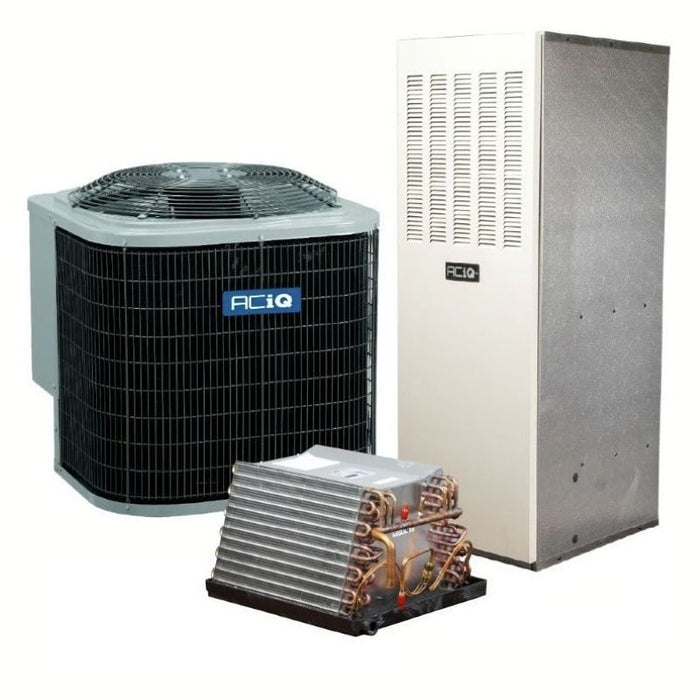
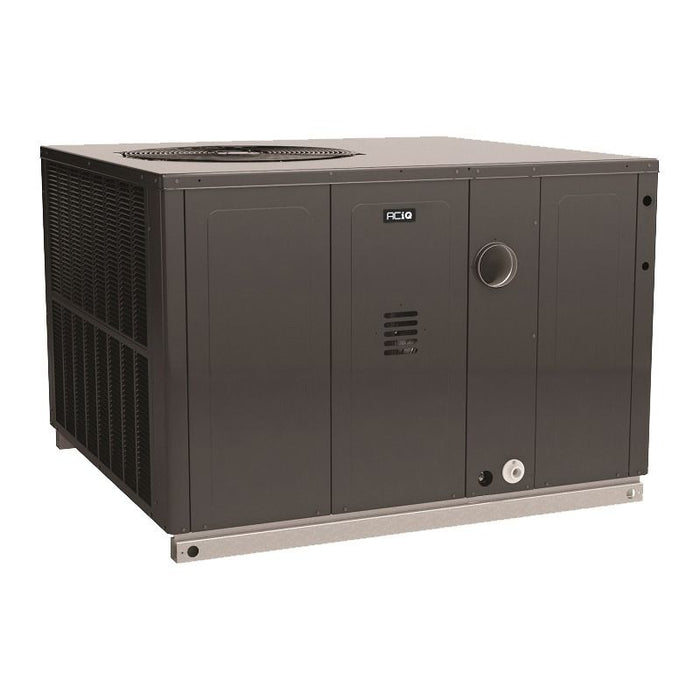
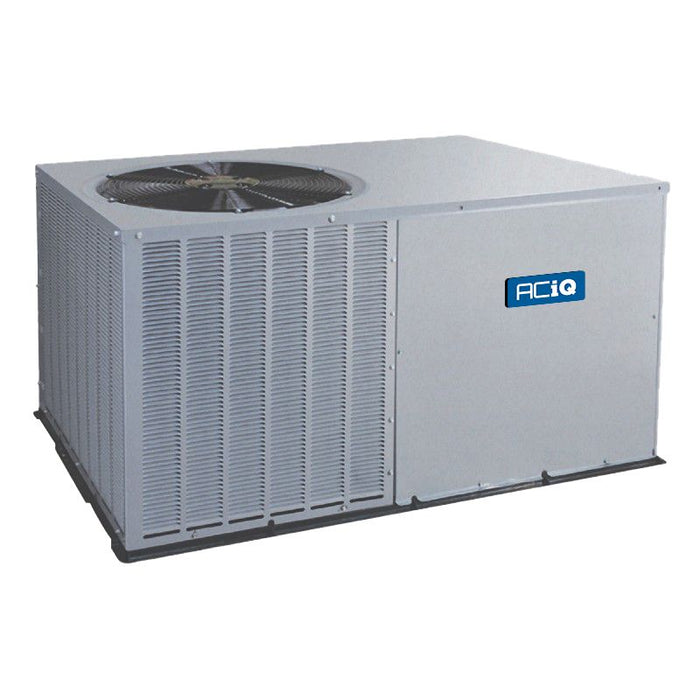
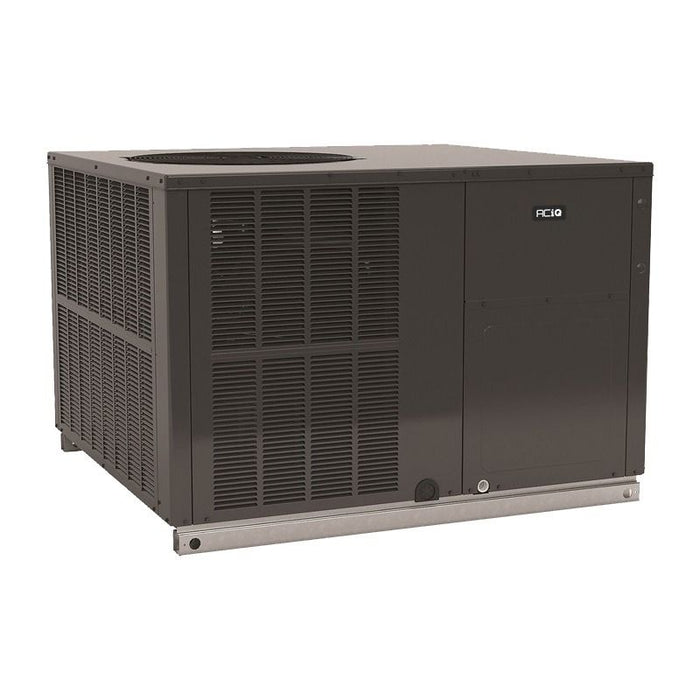
Because everyone’s AC is working overtime during the same heatwave, local supply houses and hardware stores often run out of the most common capacitor sizes. If you have a mobile home complete system or a standard residential packaged unit , you might find yourself calling around only to hear that a 35/5 or 45/5 uF capacitor is backordered for days. This guide is designed to empower you to identify your own part and order it through our parts finder tool before the indoor temperature hits a dangerous 80 degrees.
How to Read a Capacitor Label Without a Degree in Engineering
When you pull the panel off your unit (after ensuring the power is strictly off), you will see the capacitor. To get the right replacement, you must decode the label. There are two primary numbers you need to find: the Microfarads (µF) and the Voltage (VAC). Microfarads represent the "storage capacity" of the device. If your label says "45 + 5 µF," it is a "Dual Run" capacitor. The larger number (45) is for the compressor, and the smaller number (5) is for the fan motor.
It is vital to understand that Microfarads must be a near-exact match. While the industry allows for a +/- 5% or 6% tolerance, you should always strive for the exact number listed on your old part. If you put a 35 uF capacitor where a 45 uF is required, the motor will run hot and eventually burn out. However, the Voltage rating (usually 370V or 440V) works differently. You can always use a capacitor with a higher voltage rating than your original, but you must never go lower . A 440V capacitor is a perfectly safe "emergency upgrade" for a 370V system, as it simply means the part can handle more electrical "pressure" before failing.
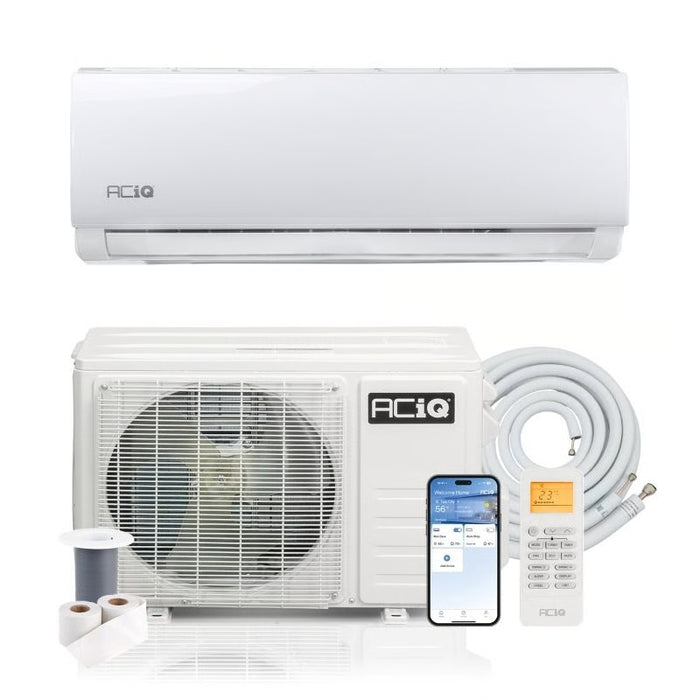
If you are maintaining a specialized system, such as a multi-zone mini split or a ptac-aciq unit, the capacitors might look slightly different, but the math remains the same. If the label is too faded to read, don't guess. You can visit our contact page and send us a photo of your unit’s data plate. Our technicians can use that info to look up the manufacturer specs and find the exact electrical match for you.
Identifying the Symptoms: Is It Really the Capacitor?
Before you order a replacement from our AC electrical accessories collection, you want to be reasonably sure that the capacitor is the problem. There are three primary ways to diagnose this without specialized tools. The first is visual. A healthy capacitor has a perfectly flat top. A failed capacitor often "mushrooms" or bulges at the top because the internal pressure has caused the safety seal to pop. If the top isn't flat, it’s dead. You might also see oil leaking down the sides of the silver canister.
The second symptom is auditory. If you stand near your mobile home heat pump condensers and hear a humming sound followed by a "click," that is the sound of a motor trying to start but lacking the electrical "kick" it needs. The click is the thermal overload switch cutting power to prevent the motor from melting.
The third test is the famous "stick test," though it should be performed with extreme caution. If your outdoor fan isn't spinning but the unit is humming, you can take a long, thin stick and gently give the fan blades a push. If the fan starts spinning on its own and continues to run after that manual push, the "start" portion of your capacitor is definitely failed. It’s like a car with a dead battery that can still be "push-started", the motor works, it just can't get going on its own.
The "Turbo" Solution: Why Every Homeowner Needs a Universal Backup
One of the most frustrating parts of HVAC maintenance is that there are hundreds of different capacitor combinations. A 36k-48k BTU packaged unit might use one size, while a mobile home gas furnace blower motor uses another. This is where the "Turbo" or Universal capacitor comes into play. These are specialized components that contain multiple internal sections which can be connected or "jumped" together to create almost any microfarad rating imaginable.
For a homeowner, keeping a universal capacitor in the garage is the ultimate "insurance policy" against a summer meltdown. It is the HVAC equivalent of having a "multi-tool" in your pocket. Instead of hunting for a specific 35/5 uF part that is out of stock everywhere, you can take a universal part and configure it in minutes to match your system. These are perfect for emergency kits, sitting right alongside your spare filters and condensate and drain accessories. When the power gets weird or a surge hits your neighborhood, having this part on hand means you aren't at the mercy of a 3-day shipping window or a $300 emergency technician visit.
Technical Compatibility & Replacement Steps
Once you have your replacement part from HVACSupplies.com , the installation is straightforward but requires respect for the electricity involved. WARNING: Capacitors can store a painful (and sometimes dangerous) electrical charge even after the power to the house is turned off. You must "discharge" the capacitor by touching an insulated screwdriver across the terminals before touching them with your hands.
- HERM: This stands for "Hermetic Compressor." This is where the wire going to your compressor connects.
- FAN: This is for the wire going to the outdoor fan motor.
- C: This stands for "Common." This is the shared terminal for the incoming power.
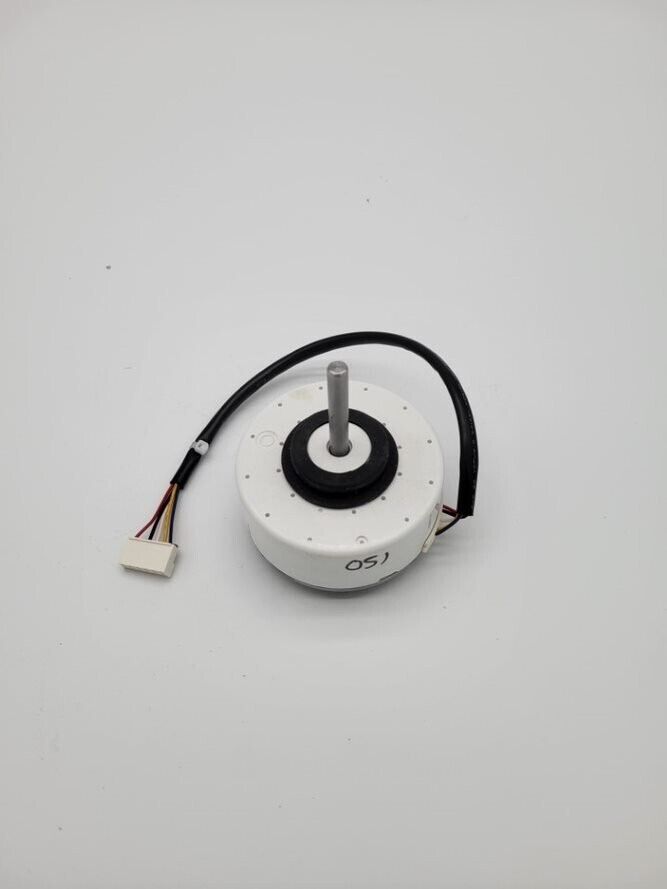
The easiest way to ensure a successful replacement is the "one-for-one" method. Do not pull all the wires off at once. Take one wire off the old capacitor and move it directly to the corresponding terminal on the new one. Even advanced inverter technology units and ductless multi-zone wall mount units rely on these basic electrical principles. If your wiring looks brittle or burned, it may be time to browse our motors and fans collection, as a bad motor can sometimes pull too much amperage and kill a brand-new capacitor instantly.
Conclusion: Don't Let a Small Part Cause a Big Meltdown
Replacing an AC capacitor is arguably the most cost-effective DIY repair a homeowner can perform. For the price of a few pizzas, you can save your family from a weekend of heat exhaustion and avoid a massive repair bill. However, the key is preparation and accuracy. As we move into the hottest months of 2026, don't assume that local shops will have what you need. Take five minutes today to open your service panel, write down the µF and VAC ratings of your capacitor, and order a spare to keep on your shelf.
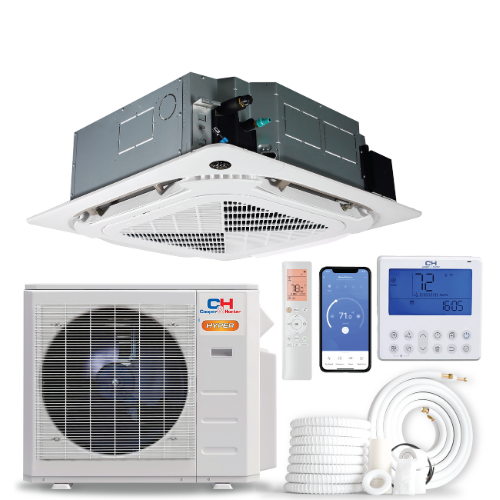
Whether you are looking for parts for a single-zone one-way ceiling cassette or a large commercial packaged unit , HVACSupplies.com is your digital warehouse. Use our parts finder tool to locate your specific model, or browse our AC electrical accessories for high-quality, long-lasting replacements.
If you encounter any trouble or your labels are illegible, our team is always here to help through our contact page . Don't let a small silver cylinder be the reason your summer is ruined. Get your backup today, stay proactive with your maintenance, and keep your cool all season long.
Emergency Capacitor Compatibility Table
| Component | Must Match Exactly? | Rule for Replacement |
| Microfarads (µF) | Yes | Stay within +/- 5% of the original rating. |
| Voltage (VAC) | No | You can use a higher voltage (e.g., 440V for a 370V). |
| Shape (Round/Oval) | No | As long as it fits in the mounting strap, shape doesn't matter. |
| Terminal Count | Yes | Use a Dual Run (3 terminals) if your old one has 3. |
Ready to secure your summer? Browse our mobile home furnaces or check out our 2-zone universal floor-ceiling systems for a complete home upgrade. For smaller needs, we have everything from 5k-9k BTU to 60k-72k BTU parts in stock.