























Elevate Your Outdoor Unit: Why You Need a Mini Split Wall Bracket and Hood Before Winter
Share
HVAC SUPPLIES
Winter Protection Guide
Protecting Your Heat Pump: Mini Split Wall Brackets & Snow Hoods
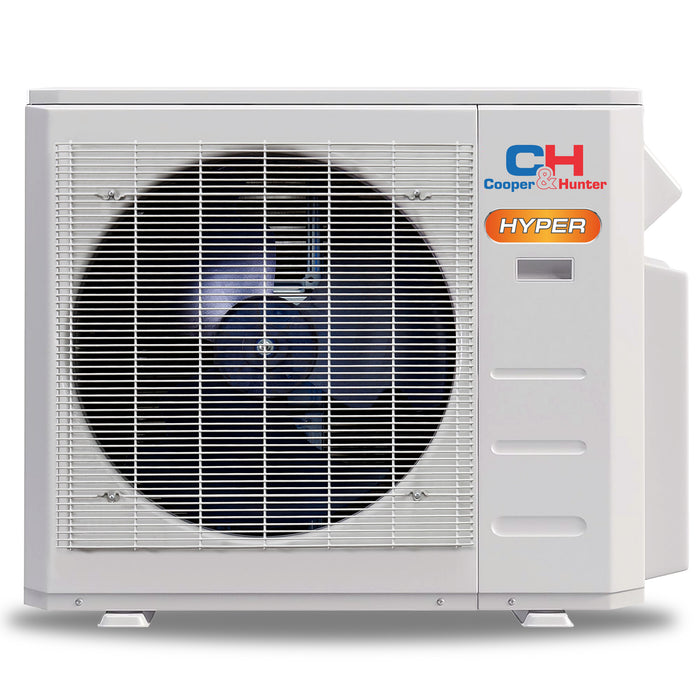
Imagine waking up in the middle of a severe winter blizzard to find your indoor heat pump blowing ice-cold air because the outdoor condenser unit is completely buried beneath a deep snow drift. Ground-mounted condensing units sitting directly on concrete pads or pavers face severe operational hazards during late autumn freeze-thaw cycles and heavy winter snowstorms. When snow drifts pack tightly against exterior coil fins, or when falling roof ice impacts the top grille, airflow becomes completely restricted. The system is forced into continuous, energy-draining defrost cycles, eventually triggering safety pressure shut-offs or causing permanent compressor failure. Protecting your outdoor investment before severe winter weather arrives starts with proper elevation and weather shielding. Installing a heavy-duty mini split wall bracket and snow hood elevates your condensing unit well above the local frost line, shields delicate heat exchanger coils from falling ice, and maintains uninhibited airflow so your system delivers reliable, energy-efficient warmth when you need it most.
Preparing your HVAC equipment for harsh winter weather requires high-grade hardware designed specifically for exterior heat pump condensers. At HVAC Supplies, property owners and HVAC professionals can explore a full line of heavy-duty mounting brackets, snow stands, protective baffles, and complete ductless heating systems engineered to withstand severe winter climates. Taking a proactive approach to outdoor unit installation prevents costly emergency service calls and ensures your heat pump operates at peak efficiency through every winter freeze.
The Winter Hazards Threatening Your Outdoor Heat Pump
Outdoor heat pump condensers are built to endure ambient cold, but unshielded ground placement exposes delicate refrigeration components to catastrophic winter hazards. Understanding how winter weather impacts outdoor coils reinforces why proper elevation and shielding are essential for long-term equipment health.
Snow Drifting and Airflow Restrictions
As winter winds whip across yards and driveways, snow naturally drifts and accumulates against low-lying structures. When an outdoor condenser rests on a standard ground pad, drifting snow quickly buries the lower half of the cabinet, choking off intake airflow across the aluminum coil fins. Without sufficient air passing through the coil, heat exchange stops entirely, forcing the compressor to work at maximum strain while delivering minimal heat inside the home.
Ice Damming and Mechanical Fan Damage
Roof overhangs and gutter lines are primary sources of winter meltwater. During afternoon freeze-thaw cycles, melted snow trickles off the roof edge and drips directly onto the outdoor condenser cabinet, where it refreezes instantly in the sub-freezing evening air. Over time, this recurring meltwater forms heavy icicles and thick ice dams inside the fan guard. When the outdoor fan motor attempts to engage, the fan blades collide with solid ice, leading to bent fan blades, burned-out fan motors, or cracked cabinet panels.
Drain Pan Freeze-Ups Below the Frost Line
During normal winter heating operation, heat pumps periodically enter defrost mode to melt thin frost off the outdoor coils. This melted frost drains into the bottom pan of the outdoor unit and escapes through drainage ports. However, if the condenser is sitting near or below the surrounding snow line, cold air freezes the runoff water before it can exit the drain pan. Ice accumulates layer by layer inside the base, eventually expanding upward into the lower coil bends and causing costly refrigerant leaks.
Property owners maintaining climate control systems across diverse regional climates can explore localized heat pump solutions built to handle specific winter conditions. Browse regional options like San Diego, CA Mini Splits, Los Angeles, CA Mini Splits, Austin, TX Mini Splits, and Aurora, IL Mini Splits to learn how properly mounted mini split systems maintain steady heating performance through seasonal shifts.
The Role of Heavy-Duty Wall Brackets and Snow Risers
Elevating your outdoor condenser off the ground is the single most effective way to protect it from drifting snow, standing water, and ground-level debris. Choosing the right mounting framework ensures structural safety, reduces sound transmission, and preserves clear drainage pathways beneath the unit.
ELEVATION DEFENSE STRATEGY
│
▼
[ Wall Bracket / Riser Base ] ──► Keeps Unit Above Frost Line
│
▼
[ Vibration Dampeners ] ──► Absorbs Operational Hums
│
▼
[ Unobstructed Drainage ] ──► Prevents Base Pan Freeze-Up
Wall Mounting Brackets: Elevating Above the Snow Line
Heavy-duty wall mounting brackets secure directly to the exterior wall framing of your building, suspending the outdoor unit several feet off the ground. Positioned safely above average regional snow accumulation levels, wall-mounted units remain completely clear of snow drifts and ice accumulation. High-quality wall brackets are manufactured from heavy-gauge galvanized steel or powder-coated aluminum, offering exceptional corrosion resistance against rain, sleet, and road salt spray.
Vibration Isolation and Noise Reduction
A common concern with mounting heat pumps on exterior walls is the potential transmission of motor vibration through wall studs into interior living spaces. Professional wall bracket kits resolve this issue by integrating heavy-duty rubber vibration isolation pads (dampeners) between the bracket arms and the condenser mounting feet. These rubber absorbers isolate operational vibrations from the compressor and fan motor, preventing low-frequency hums from echoing through bedroom or living room walls.
Ground Risers and Heavy-Duty Snow Stands
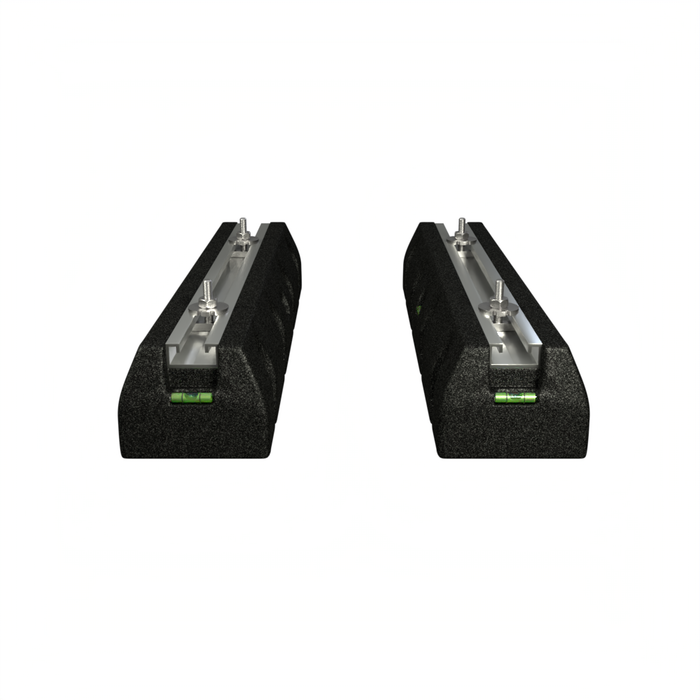
In situations where wall mounting is unfeasible—such as on delicate historic siding or non-load-bearing exterior walls—heavy-duty ground risers and snow stands offer a robust alternative. Composite ground pads paired with 12 to 24-inch powder-coated snow risers keep the condensing unit elevated safely off the ground while providing a stable, level base. Snow stands allow defrost meltwater to drop freely out of the base pan onto the ground below, preventing ice from backing up into the outdoor cabinet.
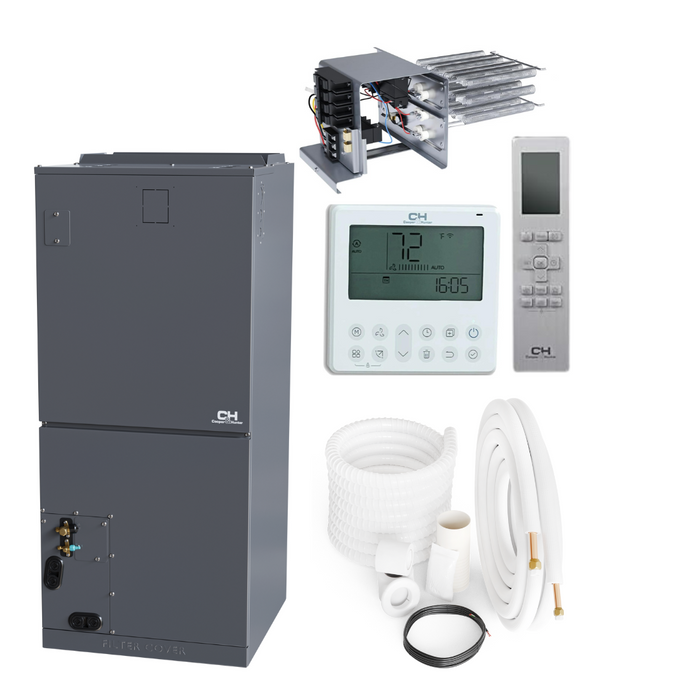
Comprehensive residential climate planning often involves pairing outdoor condensers with matching indoor air handling systems. Explore matched ductless and ducted indoor units, including Air Handlers, Air Handlers ACIQ, Air Handlers Cooper and Hunter, and Air Handlers MRCOOL to build a resilient winter heating setup.
For homeowners in colder northern corridors where snow accumulation is a major seasonal factor, localized mini split solutions offer high low-ambient heating capacities. Explore regional offerings such as Boston, MA Mini Splits, Buffalo, NY Mini Splits, Chicago, IL Mini Splits, Miami, FL Mini Splits, and New York City, NY Mini Splits.
Protective Snow Hoods & Deflectors: Defending Against Falling Ice
While a wall bracket or snow stand protects the bottom of the outdoor unit, the top and side heat exchanger coils remain vulnerable to falling roof ice and driving winds. Protective snow hoods and wind baffles provide total top-down shielding, ensuring your heat pump operates uninterrupted through severe blizzards.
Deflecting Falling Ice and Heavy Snow Loads
Snow hoods attach directly to the outer casing of the condensing unit, forming an angled, protective steel overhang above the top discharge fan and intake coils. When heavy icicles detach from roof eaves or thick snow packs slide off metal roofs, the heavy-gauge snow hood deflects the impact away from delicate fan guards and aluminum coil fins. This prevents physical denting, cracked fan shrouds, and motor shaft misalignment caused by sudden falling debris.
Preserving Critical Intake and Discharge Airflow
Unlike generic, full-enclosure vinyl covers—which must be removed prior to operating the heat pump—engineered snow hoods are designed specifically for active winter operation. Snow hoods feature wide, sloped air intake channels that allow full cubic-feet-per-minute (CFM) airflow to reach the outdoor coil without adding static pressure resistance. The unit maintains maximum heating efficiency while remaining continuously protected from driving snow and sleet.
Preventing Wind Baffling and Frost Accumulation
High winter winds blowing directly into an unshielded fan outlet can cause "wind baffling," where strong gusts force the outdoor fan to spin backward or work against heavy head pressure. Cold winter winds also accelerate coil frost buildup by rapidly dropping coil surface temperatures. Installing wind baffles and side snow hoods blocks prevailing freezing winds, allowing the outdoor fan to exhaust cold air efficiently while reducing the frequency of automatic defrost cycles.
If you are retrofitting central ducted heat pumps or replacing older split systems alongside outdoor mounting upgrades, pairing high-efficiency coils ensures optimal heat transfer during winter heating mode. Explore our full range of evaporator coils grouped by capacity and brand:
AC Plus Coil
AC Plus Coil 15k-18k
AC Plus Coil 18k-24k
AC Plus Coil 24k-30k
AC Plus Coil 30k-36k
AC Plus Coil 36k-48k
AC Plus Coil 48k-60k
AC Plus Coil 60k-72k
AC Plus Coil ACIQ
Property owners across western and southern states can also review regional heat pump options designed for seasonal heating efficiency, such as Portland, OR Mini Splits, San Antonio, TX Mini Splits, Seattle, WA Mini Splits, Worcester, MA Mini Splits, San Jose, CA Mini Splits, San Francisco, CA Mini Splits, Fresno, CA Mini Splits, and Dallas, TX Mini Splits.
Installation Mounting Advice & Pre-Winter Best Practices
Properly mounting a wall bracket or snow stand requires careful planning, robust fastening hardware, and attention to proper drainage clearances. Following these practical mounting best practices ensures your outdoor heat pump remains safe, level, and secure all winter long.
Determining the Ideal Mounting Height
Before drilling mounting holes, research historical peak snowfall levels for your local municipality. Measure the highest recorded snow depth over the past decade and add at least 12 inches of additional safety clearance.
Mounting the base of your outdoor unit at least 18 to 24 inches off the ground, or higher in heavy snow belts, ensures that drifting snow will never reach the bottom drain pan or block lower coil fins.
Anchoring to Solid Structural Wall Studs
Never attempt to mount a heavy outdoor condensing unit into vinyl siding, stucco, or wall sheathing alone. Outdoor heat pumps weigh anywhere from 80 to over 200 pounds, requiring secure anchoring directly into structural wall studs, solid brick, or poured concrete walls. Use heavy-duty 3/8-inch stainless steel or galvanized lag bolts driven deep into wall studs, or heavy-duty masonry expansion anchors for concrete foundations. Verify that the bracket arms are perfectly level across both axes using a spirit level before tightening fasteners.
Integrating Auxiliary Drain Pan Heaters
Even with an elevated wall bracket, extremely low ambient temperatures can cause defrost meltwater to freeze as soon as it hits the cold metal base pan. Installing an auxiliary, thermostatically controlled drain pan heater element along the bottom of the outdoor unit ensures that defrost runoff remains liquid and drains completely out of the cabinet. This prevents ice from building up inside the base pan during sub-zero freeze events.
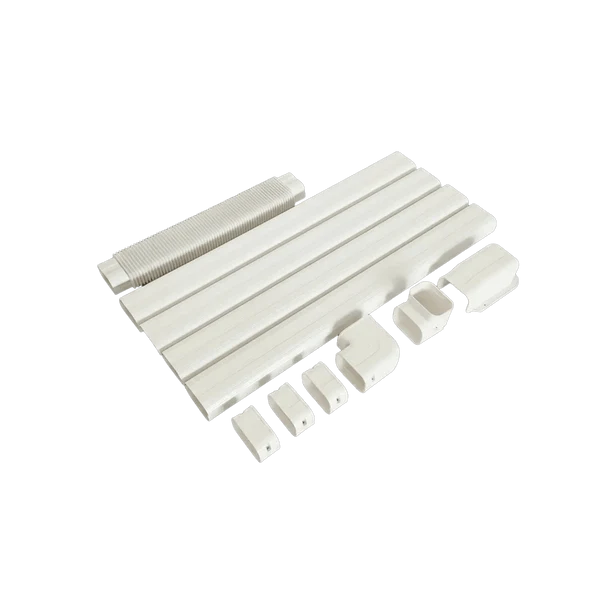
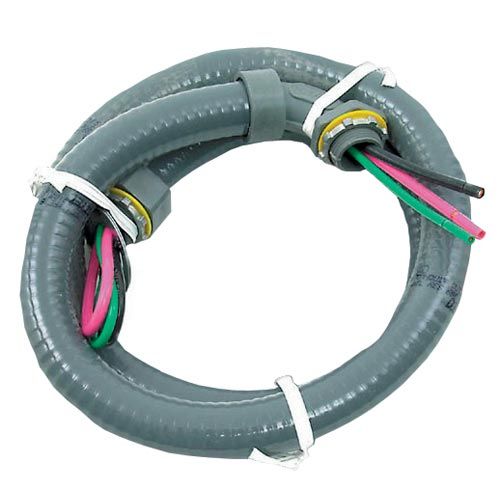
When setting up full residential HVAC systems, completing your mounting upgrade with the right electrical whips, line hide covers, and wall sleeves ensures a professional finish. Explore our specialized hardware collections, including AC Electrical Accessories, Air Quality Accessories, Central Ducted Accessories, Mini Splits Accessories, Mobile Home Accessories, Package Units Accessories, Parts and Accessories, and Specialty Units Accessories.
Protect Your Heat Pump Before Winter Freezes Arrive
Leaving your outdoor condensing unit exposed to ground snow accumulation, freezing drain water, and falling roof ice is an unnecessary risk that can cause severe winter equipment damage. By elevating your outdoor unit using a durable mini split wall bracket and snow hood, you preserve uninhibited airflow across heat exchanger coils, eliminate freeze-ups inside the drain pan, and shield delicate mechanical fans from falling icicles.
Prepare your outdoor heating hardware before the first severe freeze-thaw cycle of the winter season. Browse our extensive catalog of mounting brackets, snow stands, protective baffles, and complete mini split systems at HVAC Supplies. Contact us now so we can give you expert advice regarding bracket weight capacities, regional snowfall clearances, or mounting hardware selection. Invest in proper elevation today to ensure reliable, high-efficiency heat pump operation all winter long.
Ready to prepare your outdoor heat pump for severe winter conditions? Explore our full catalog of mounting hardware, snow stands, and protective accessories today.