












Daikin vs. Goodman Central AC: Premium Inverter Comfort vs. Reliable Budget Cooling
Share
HVAC SUPPLIES
Central AC Comparison Guide
Daikin vs Goodman Central Air Conditioners: Premium Inverter Efficiency vs High-Value Reliability
When summer heat waves sweep across the country, home comfort depends heavily on the performance and efficiency of your central air conditioner. Navigating the replacement market can quickly become overwhelming, given the vast selection of brands, compressor types, and price points. Two names dominate the conversation among home improvement specialists, contractors, and budget-conscious property owners: Daikin and Goodman. While these two brands share a manufacturing parent company, they target vastly different operational needs and financial strategies. Understanding how they stack up against one another empowers you to make a smart, long-term investment in your indoor climate.
Choosing the ideal central cooling system requires balancing upfront equipment expenses against ongoing electrical costs, home layout requirements, and regional climate demands. Whether you are considering a high-efficiency upgrade for a long-term family residence or seeking a straightforward, reliable replacement condenser for an investment property, comparing Daikin and Goodman gives you a clear window into modern HVAC technology. You can explore an extensive catalog of factory-direct split systems, air handlers, and accessories directly on HVAC Supplies to find the precise machinery for your home layout.
The decision to install a new central air conditioner often comes down to a fundamental economic trade-off: paying more upfront for variable-speed energy savings or minimizing initial capital outlay with a proven budget-friendly system. Daikin stands out as a flagship line engineered around variable-speed inverter compressors, quiet operation, and ultra-high seasonal efficiency ratings. Goodman represents one of North America's most recognizable workhorse brands, providing accessible, durable, single- and two-stage cooling performance without unnecessary electronic complexity.
Despite their contrasting market positions, many property owners are surprised to learn that Daikin acquired the Goodman Manufacturing company in 2012. This acquisition united Daikin’s global engineering innovations with Goodman’s massive, streamlined North American manufacturing network. Today, both brand families are manufactured side-by-side in state-of-the-art facilities, yet they maintain distinct design philosophies, control systems, and component tiering.
When evaluating a Daikin vs Goodman central air conditioner upgrade, you are essentially deciding between premium operational luxury and rugged financial value. Daikin variable-speed inverter split systems modulate their cooling capacity continuously, maintaining steady indoor temperatures and pulling humidity from the air with remarkable precision. On the other hand, Goodman central AC condensers prioritize straightforward mechanics, offering dependable stage-based cooling that delivers immediate whole-home summer heat relief at wholesale-friendly price points.
Brand Overview & Shared Heritage
To appreciate how these systems perform in everyday conditions, it helps to look at the history and manufacturing standards behind the nameplates. Daikin Industries was founded in Osaka, Japan, and grew into a global leader in climate management technology. Known world-wide for pioneering Variable Refrigerant Volume (VRV) and variable-speed inverter technology, Daikin has consistently driven the industry toward higher efficiency and smarter system integration. When Daikin entered the North American residential market in a major way, it sought to pair its advanced electronic architecture with established domestic distribution channels.
Goodman, founded in Texas in 1975, built its foundation on a straightforward promise: reliable, high-quality heating and cooling equipment accessible to every homeowner. By maintaining low overhead and focusing on standardized, robust components, Goodman earned a reputation as the preferred brand for budget-conscious homeowners, real estate developers, and independent contractors. Following the 2012 acquisition, Daikin invested heavily in expanding production, culminating in the massive Daikin Texas Technology Center near Houston.
| Feature Category | Daikin Central AC | Goodman Central AC |
|---|---|---|
| Primary Focus | Premium Inverter Technology | High-Value Traditional Cooling |
| Compressor Types | Inverter Variable-Speed | Single-Stage & Two-Stage |
| Seasonal Efficiency | High SEER2 Ratings (Up to 21+) | Standard to Moderate SEER2 |
| Operational Sound | Ultra-Quiet Low Decibels | Standard Outdoor Condenser Noise |
| System Complexity | Advanced Inverter Diagnostics | Simple Mechanical Components |
| Primary Value | Long-Term Energy Savings & Comfort | Low Upfront Cost & Fast Payback |
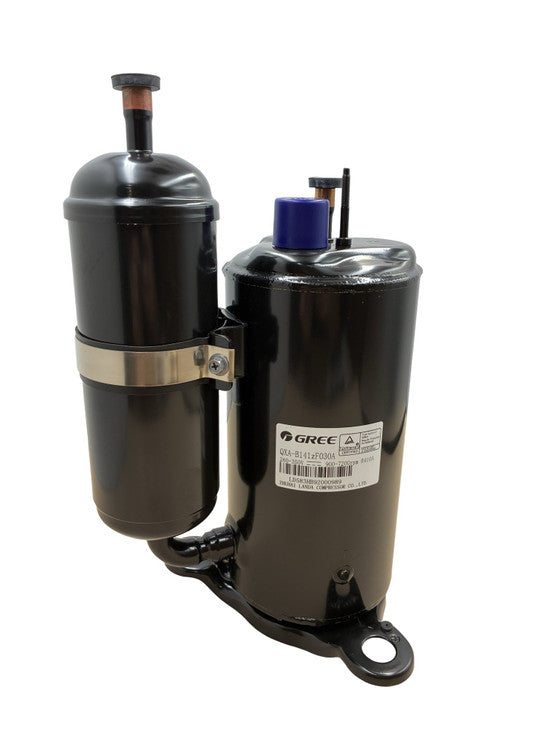
This shared manufacturing footprint means both brands benefit from stringent quality control checks, high-grade copper tubing, and durable cabinet powder-coating. However, the internal electronics, compressor designs, and expansion device sophistication differ substantially. While Goodman models utilize proven scroll compressors and traditional contactors, Daikin units feature integrated inverter boards, electronic expansion valves, and specialized sound-dampening enclosures.
Daikin Central AC: Premium Inverter Comfort & Advanced Efficiency
Daikin central split systems are designed for homeowners who view home comfort as a long-term investment in energy management, whisper-quiet living, and precise environmental control. The foundation of Daikin's superior cooling performance is its advanced inverter compressor technology. Unlike traditional fixed-speed compressors that run at full blast before abruptly shutting down, a Daikin inverter compressor scales its speed up and down in microscopic increments.
Inverter Variable-Speed Technology
Because an inverter system dynamically matches the exact cooling demand of the home at any given moment, it rarely needs to run at 100% capacity. On a typical summer afternoon, a Daikin system might hover gently around 30% or 40% capacity, using a fraction of the electricity required by a standard condenser. This continuous, low-speed operation eliminates the harsh temperature swings associated with cycling units, keeping room temperatures within fractions of a degree of your thermostat setting.
Superior Energy Efficiency & SEER2 Savings
Continuous modulation dramatically reduces electrical draw. In rush-hour heat conditions, starting a traditional compressor creates a heavy spike in power consumption. By eliminating constant start-stop cycles, Daikin systems achieve high SEER2 (Seasonal Energy Efficiency Ratio 2) ratings, drastically reducing monthly utility bills over time. Additionally, long, low-speed cooling cycles allow the evaporator coil to pull vastly more moisture out of the air, keeping indoor humidity comfortably low without over-cooling your living space.
Premium Features & Extended Guarantees
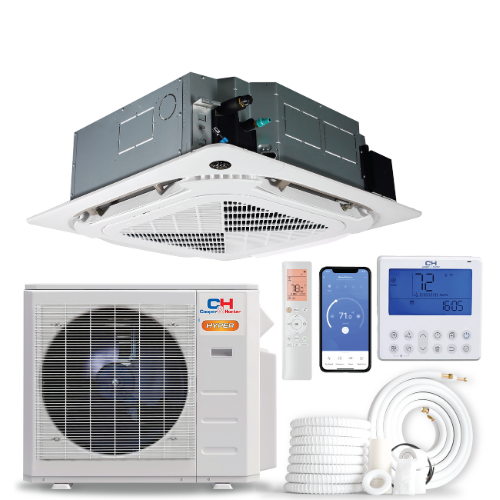
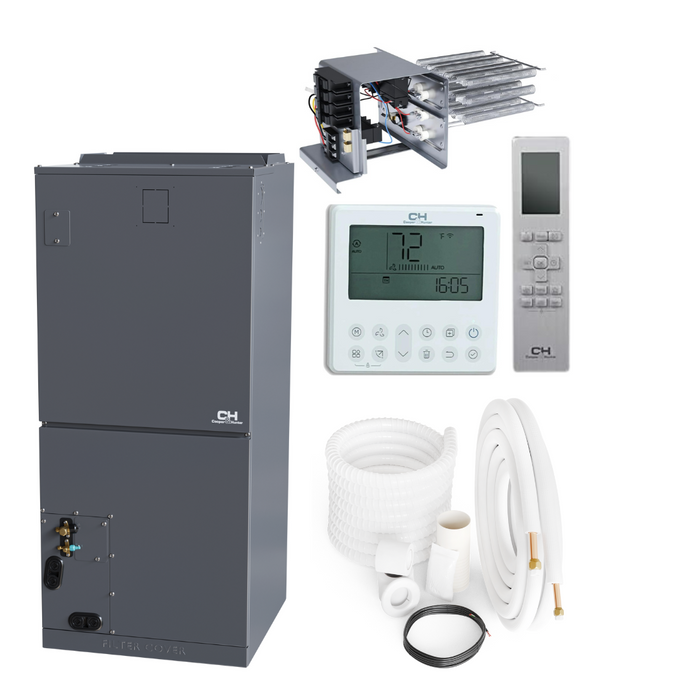
Daikin equips its premium systems with intelligent communication protocols that continually monitor system pressures, temperatures, and electrical parameters. Outdoor sound levels are suppressed using aerodynamic fan blade profiles and sound-isolating compressor blankets. Homeowners looking to build a modern ducted network can match these high-tier outdoor units with advanced indoor equipment from the Air Handlers Collection or incorporate specialized room delivery using a Single-Zone Four-Way Ceiling Cassette by Daikin.
Goodman Central AC: Reliable, High-Value Wholesale Cooling
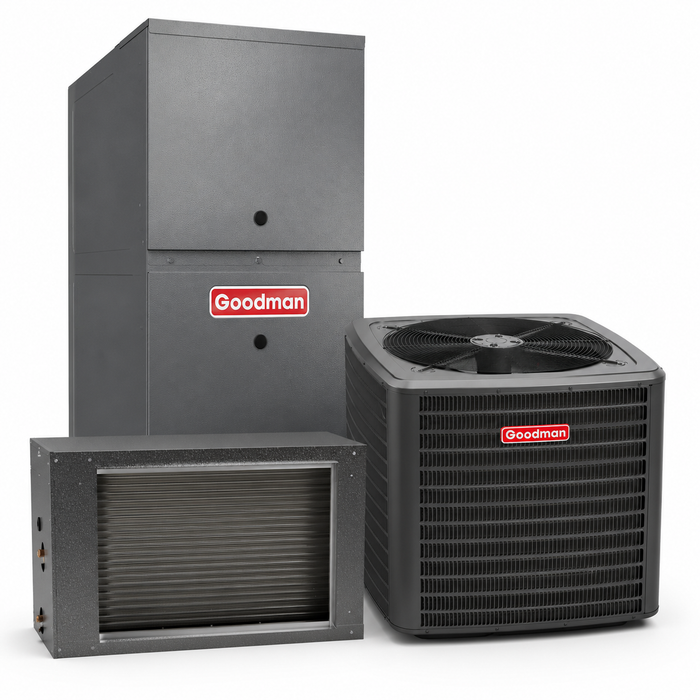
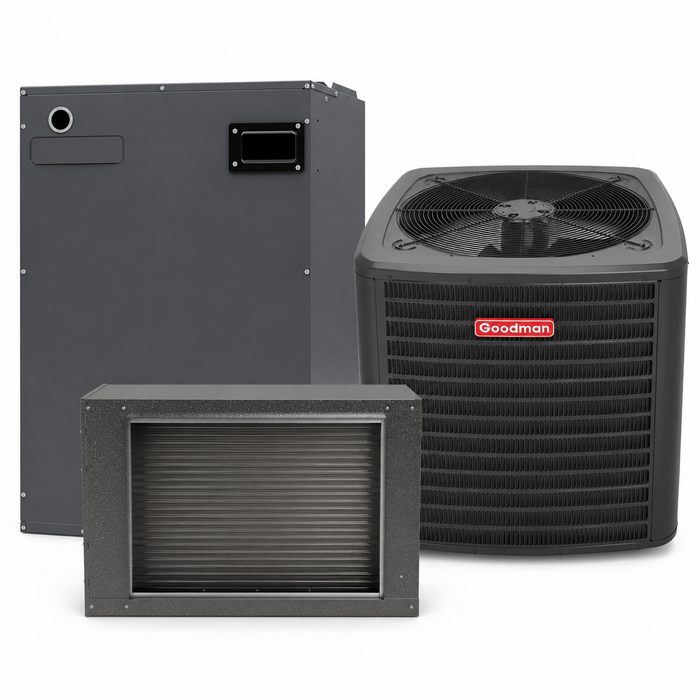
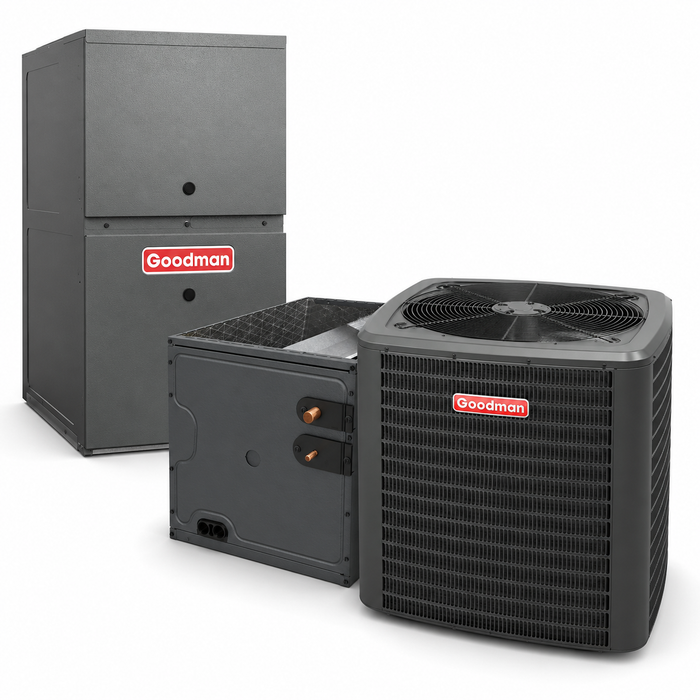
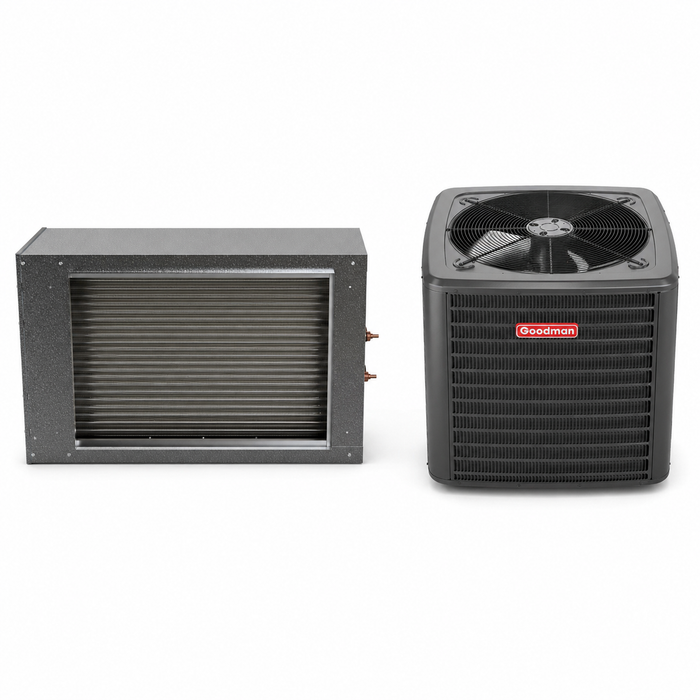
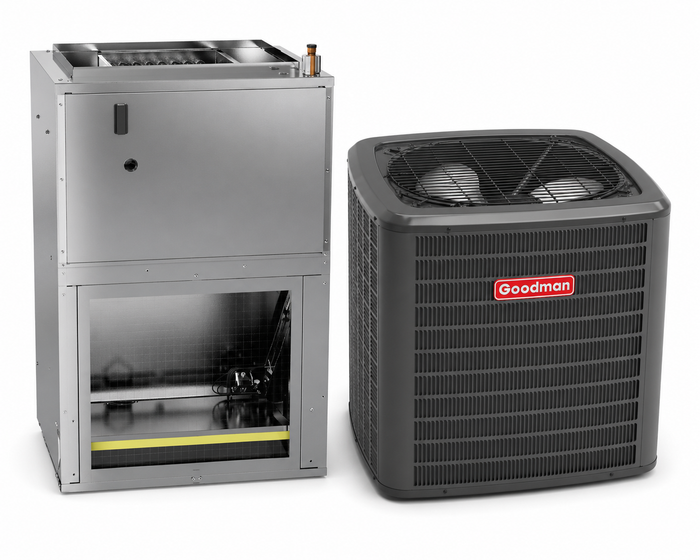
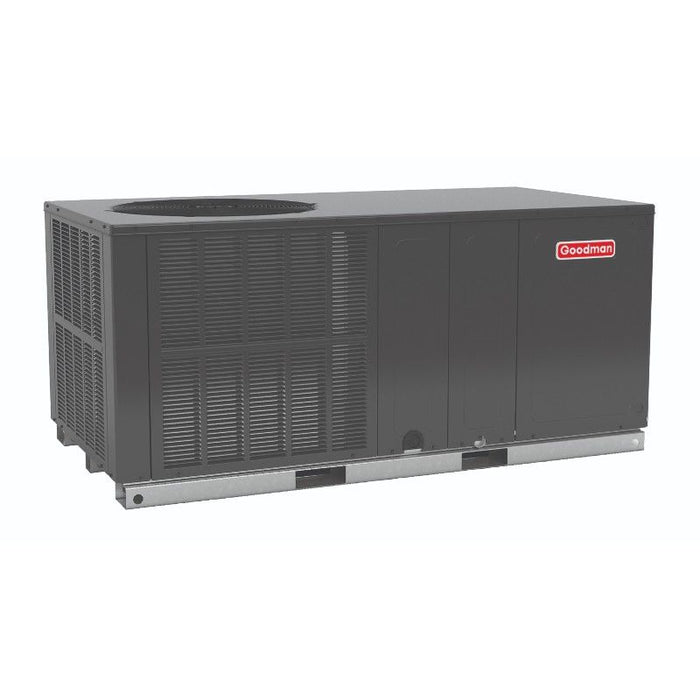
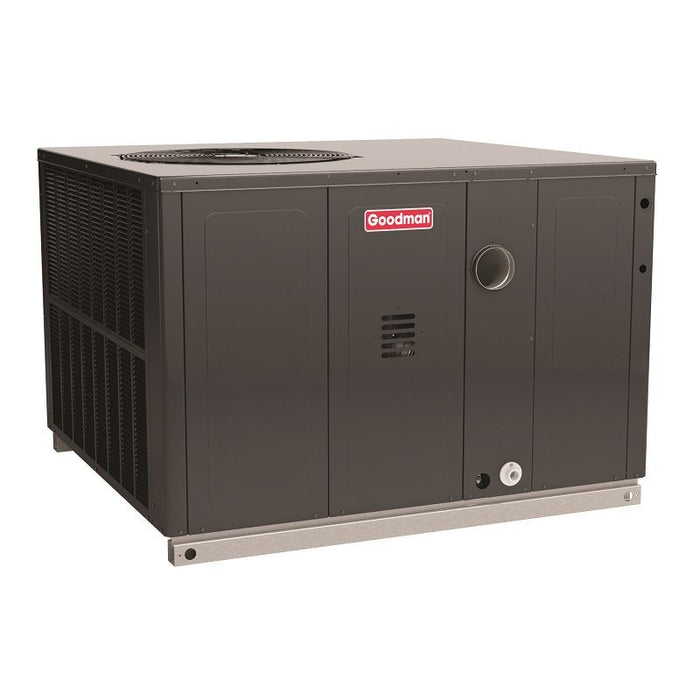
While Daikin represents the cutting edge of variable-speed technology, Goodman remains the gold standard for high-value, straightforward residential cooling. Millions of homes rely on Goodman central AC condensers to stay cool through scorching summers without requiring significant capital outlays. For real estate investors, property managers, or budget-focused homeowners, Goodman delivers a compelling balance of upfront affordability and straightforward reliability.
Proven Single & Two-Stage Reliability
Goodman built its name on traditional single-stage and two-stage cooling designs. Single-stage models run at 100% capacity whenever cooling is called for, providing straightforward power that cools homes down fast. Two-stage models offer a step up in comfort, operating at a lower stage on milder days to conserve electricity before ramping up to full capacity during intense heat spikes. Because these systems rely on time-tested mechanical components, virtually any certified HVAC technician can inspect, service, or repair a Goodman system with ease.
Unmatched Upfront Value
The primary driver for choosing a Goodman system is its lower initial purchase cost. Replacing a complete central cooling system can place a strain on home improvement budgets. Goodman equipment allows you to restore reliable central air conditioning at a fraction of the equipment cost of premium inverter options. This makes Goodman an unbeatable choice for fast emergency replacements or scheduled upgrades where minimizing upfront capital expenditure is the main goal.
Widespread Component & Part Availability
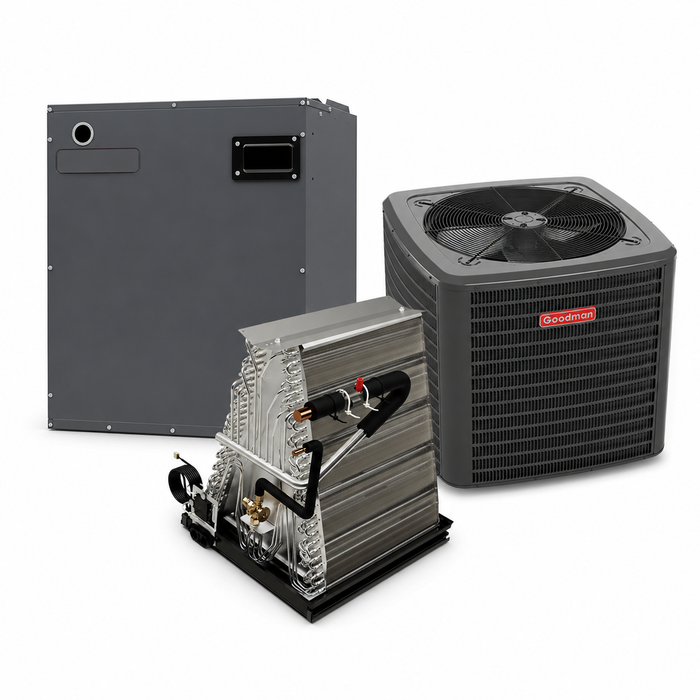
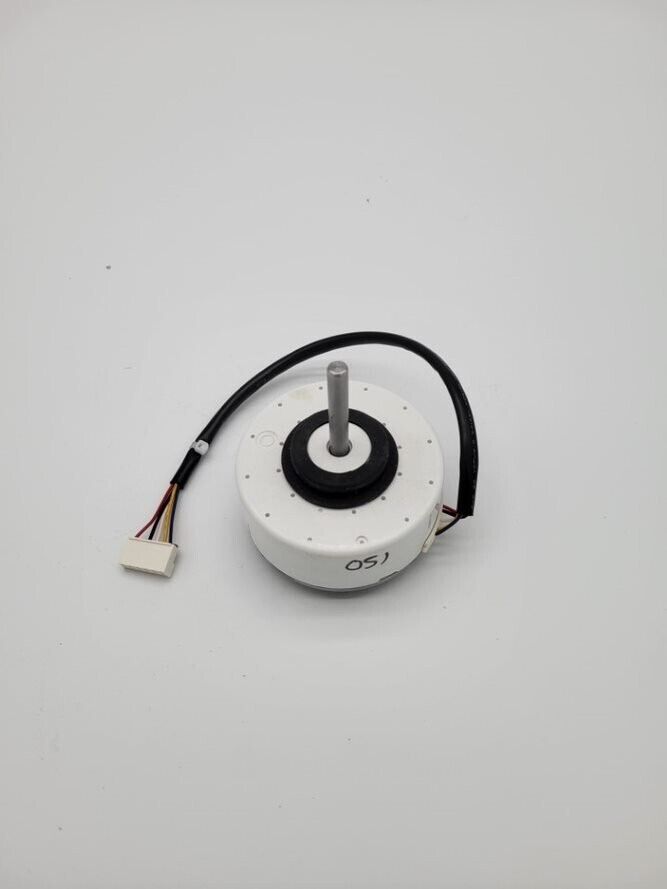
Another advantage of traditional Goodman machinery is universal serviceability. Replacement parts like contactors, capacitors, fan motors, and expansion valves are readily available nationwide. You can easily pair a durable outdoor condenser with matching indoor components from the AC Plus Coil Collection or the Evaporator Coils Collection to create a high-value system that keeps maintenance simple for years to come.
Feature-by-Feature Comparison: Daikin vs. Goodman
Evaluating a central AC upgrade requires looking beyond initial price tags to see how equipment differences translate into everyday living conditions. Examining specific operational parameters makes it easier to select the unit that aligns with your household priorities.
Upfront Cost vs. Long-Term Return on Investment
Goodman wins decisively when it comes to low initial equipment costs. Purchasing a Goodman system leaves more money in your bank account on day one. Daikin requires a higher initial outlay, but that investment pays off through month-after-month reductions in electric bills. If you plan to live in your home for five years or more, the accumulated energy savings of a high-SEER2 Daikin inverter system can offset the upfront price difference.
Humidity Management & Air Quality
In warmer, muggy weather, managing humidity is just as important as dropping the temperature. A standard single-stage Goodman AC cools the air rapidly, but quick cooling cycles mean the unit may turn off before it extracts enough moisture. Daikin’s inverter technology runs for extended, gentle cycles that continuously draw water vapor across the cold indoor coil, maintaining a crisp, low-humidity indoor environment.
Sound Levels & Acoustic Comfort
If your outdoor condenser sits right outside a bedroom window or near a patio, operational sound becomes a big factor. Traditional condensers produce a noticeable sound when the compressor kicks on. Daikin inverter outdoor units start up gradually without sudden electrical or mechanical thumps, operating at whisper-quiet decibel levels that let you enjoy outdoor living spaces without fan noise.
Servicing & Technical Maintenance
Goodman’s simple electrical and mechanical design means routine maintenance and out-of-warranty repairs are straightforward for any technician. Daikin units incorporate sophisticated printed circuit boards, diagnostic sensors, and proprietary communication protocols. While these electronics maximize efficiency and self-monitoring, servicing them requires specialized diagnostic tools and technicians who understand modern inverter technology.
Choosing the Right System for Your Climate and Property
Your geographic region, local utility rates, and home layout play a huge role in determining whether a Daikin or Goodman system is the right choice. A system that makes perfect sense in a mild coastal valley might not be ideal for a desert home or an oceanfront apartment.
| Target Geographic Region | Typical Summer Climate | Recommended System Choice |
|---|---|---|
| Deep South & Gulf Coast | Extreme Heat & High Humidity | Premium Variable-Speed Inverter |
| Sunbelt & Desert West | High Summer Heat & Low Humidity | High Efficiency Inverter / 2-Stage |
| Moderate Northern Zones | Brief Summer Heat Waves | Cost-Effective Single/Two-Stage |
| Coastal Mild Zones | Short Cool & Mild Humid Spells | Value-Focused Single-Stage |
High-Humidity & Extreme Heat Zones
If your home sits in a hot, humid environment like Miami, FL or deals with intense summer heat in Dallas, TX and San Antonio, TX, your air conditioner works hard for months at a time. In these regions, Daikin variable-speed inverter systems pay for themselves quickly through continuous dehumidification and massive seasonal power savings.
Mild Climates & Secondary Properties
In areas with shorter summer seasons, such as Seattle, WA, Portland, OR, or Buffalo, NY, cooling units run far fewer total hours each year. In these markets, paying a premium for top-tier inverter efficiency may take decades to recover in energy savings. A reliable, budget-friendly Goodman single-stage or two-stage central AC provides all the cooling power needed for summer heat waves while keeping initial costs low.
Diverse Urban Landscapes & Specialized Housing
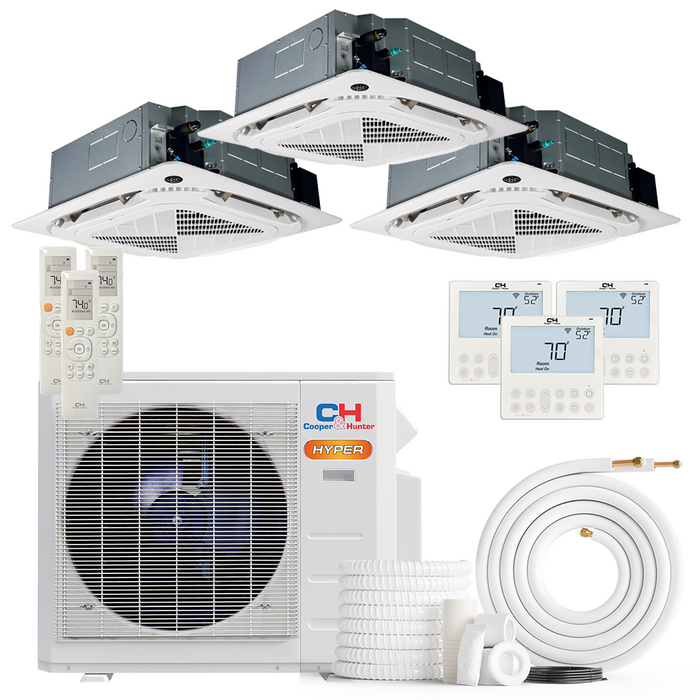
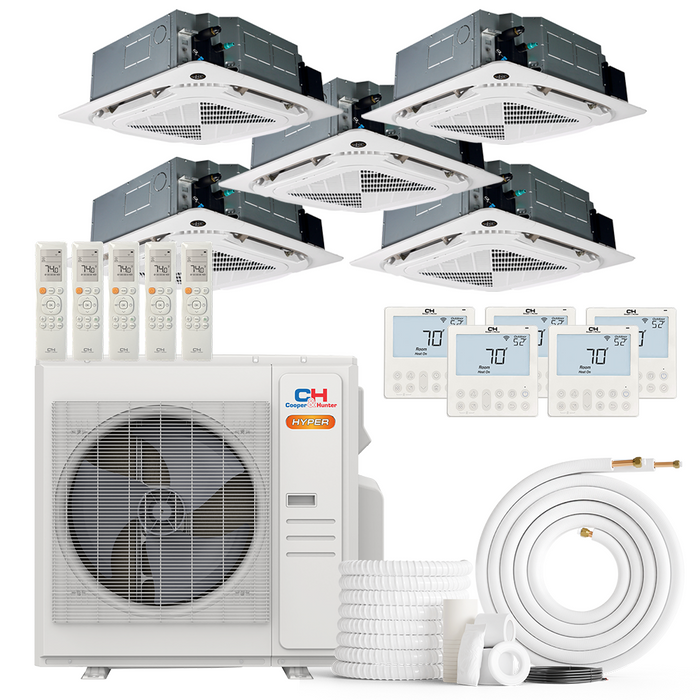
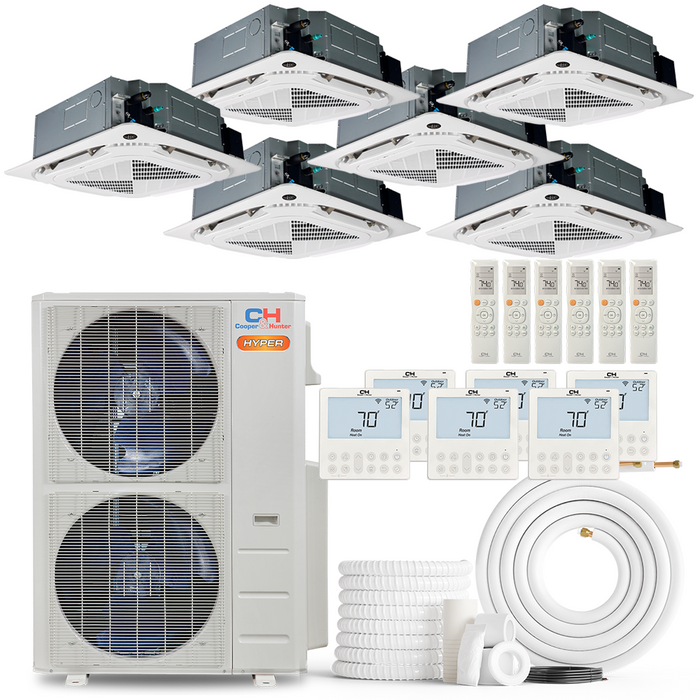
Urban homes, rental units, and custom layouts across cities like Los Angeles, CA, Chicago, IL, and Boston, MA often call for tailored equipment configurations. For manufactured housing, specialized packages like the Mobile Home AC and Coil Systems Collection provide tailored airflow solutions. Homes without existing ductwork can bypass traditional setups entirely using flexible multi-zone zoning options like Multi-Zone Four-Way Ceiling Cassettes.
Essential Installation Accessories & System Upgrades
Installing a new central AC condenser—whether Daikin or Goodman—requires more than simply dropping an outdoor cabinet onto a concrete pad. A reliable, long-lasting setup depends on the auxiliary components and protective accessories that support the system.
COMPLETE SYSTEM INSTALLATION INFRASTRUCTURE
│
▼
[ Electrical Safeguards ] ──► Surge Protectors & Whips
│
▼
[ Air Quality Filtration ] ──► Return Plenum Hardware
│
▼
[ Structural Hardware ] ──► Linesets & Isolation Pads
Electrical Safeguards & Connections
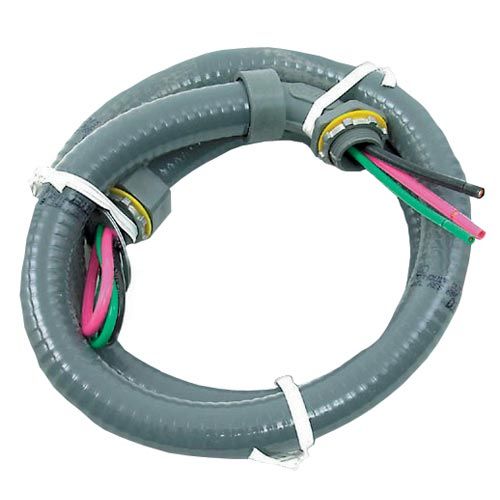
Modern cooling equipment contains sensitive motors and electronic controls that must be protected against grid fluctuations and lightning strikes. Installing high-quality surge protectors, fused disconnect boxes, and durable electrical whips from the AC Electrical Accessories Collection prevents sudden electrical damage and extends system longevity.
Indoor Air Quality Enhancements
As air circulates through your home's ductwork, sealing out dust, pollen, and allergens is vital for healthy living spaces. Upgrading your return plenum with specialized filtration or purification hardware from the Air Quality Accessories Collection ensures your indoor air stays clean, reducing dust buildup on sensitive indoor evaporator coils.
Refrigerant Line Protection & Structural Fittings
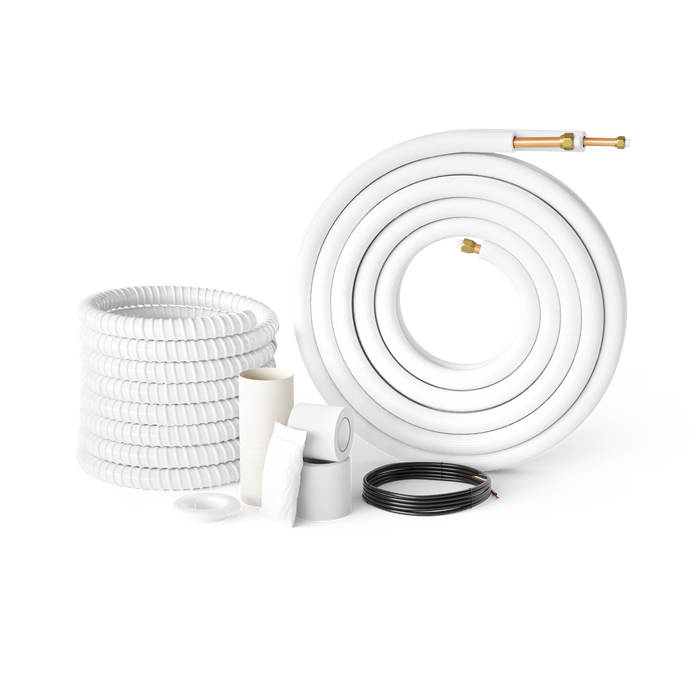
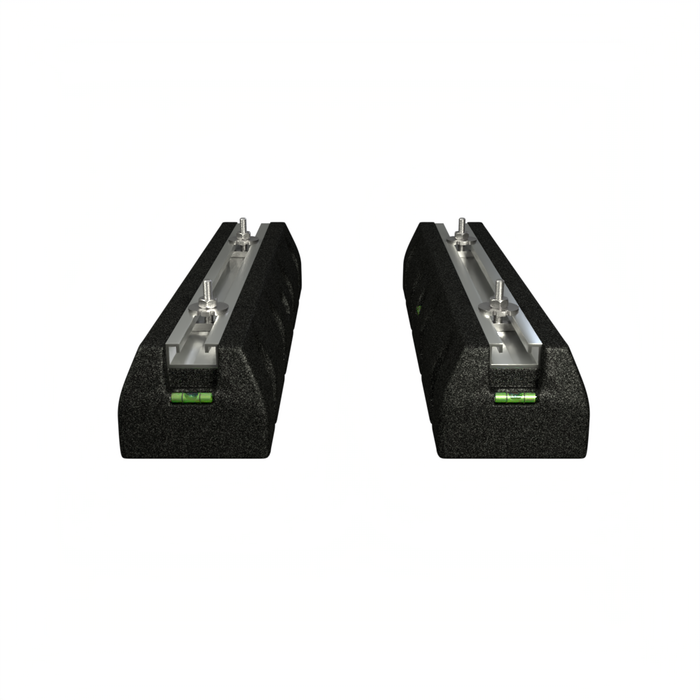
Connecting your outdoor condenser to your indoor coil requires insulated copper line sets, mounting brackets, and vibration-isolation pads. Sourcing durable hardware from Central Ducted Accessories and Parts and Accessories prevents refrigerant leaks, reduces cabinet vibration, and keeps your installation neat and code-compliant.
Sourcing Your System from HVAC Supplies
Choosing where to purchase your central air conditioner is just as important as choosing the equipment brand. Sourcing directly through established distributors gives you access to full factory warranties, transparent pricing, and direct technical support without retail markups.
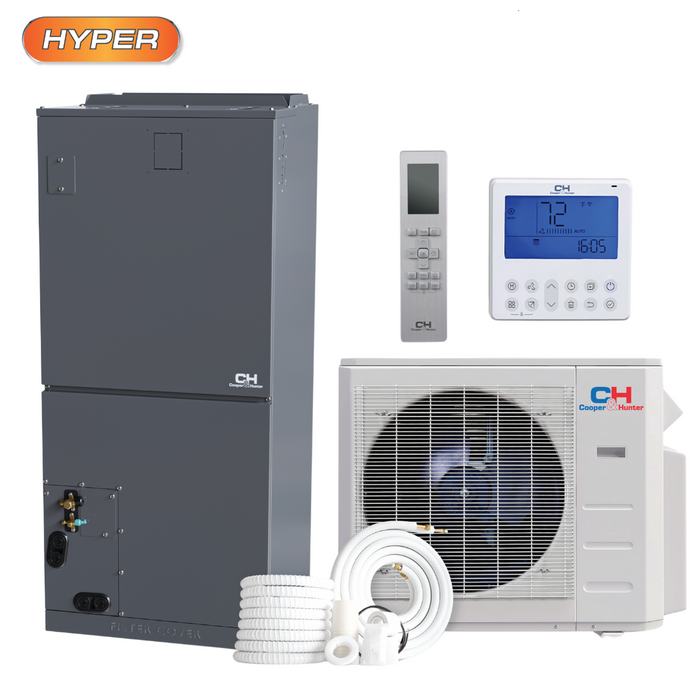
HVAC Supplies carries a deep selection of residential and commercial climate systems. Beyond Daikin and Goodman configurations, you can browse top-rated equipment lines including ACiQ, MRCOOL, Cooper & Hunter, Bravo, and Armbridge.
| Customer Advantage | Service Benefit |
|---|---|
| Factory-Direct Pricing | Eliminates middleman markups for full systems |
| Direct-to-Door Freight Delivery | Fast shipping to homes and commercial job sites |
| Specialized Regional Support | Tailored assistance for local building codes |
| Dedicated Technical Assistance | Expert sizing and component matching support |
With nationwide freight distribution, direct shipping delivers equipment straight to your doorstep or job site across major metropolitan areas, including San Diego, CA, San Jose, CA, San Francisco, CA, Fresno, CA, New York City, NY, Aurora, IL, and Worcester, MA. If you need help sizing tonnage, checking coil compatibility, or selecting installation accessories, the product support team is always ready to assist via the HVAC Supplies Contact Page.
Conclusion
When comparing Daikin vs Goodman central air conditioners, there is no single "winner"—only the system that best matches your budget, climate, and long-term plans. Daikin provides variable-speed inverter technology, low operating noise, continuous humidity control, and lower long-term power bills. Goodman delivers time-tested reliability, straightforward serviceability, and low upfront costs that make whole-home cooling replacement accessible and practical.
By matching your equipment selection to your regional climate, home layout, and financial goals, you can build an efficient cooling setup that keeps your space comfortable for years to come. Explore the complete lineup of central split systems, air handlers, and installation supplies at HVAC Supplies to upgrade your home's summer comfort today.
Ready to find the perfect Daikin or Goodman central cooling system for your home or property? Browse the extensive catalog of high-efficiency equipment and accessories today.